From Poutine to Nanaimo Bars: 12 Iconic Canadian Foods That Tell a Story
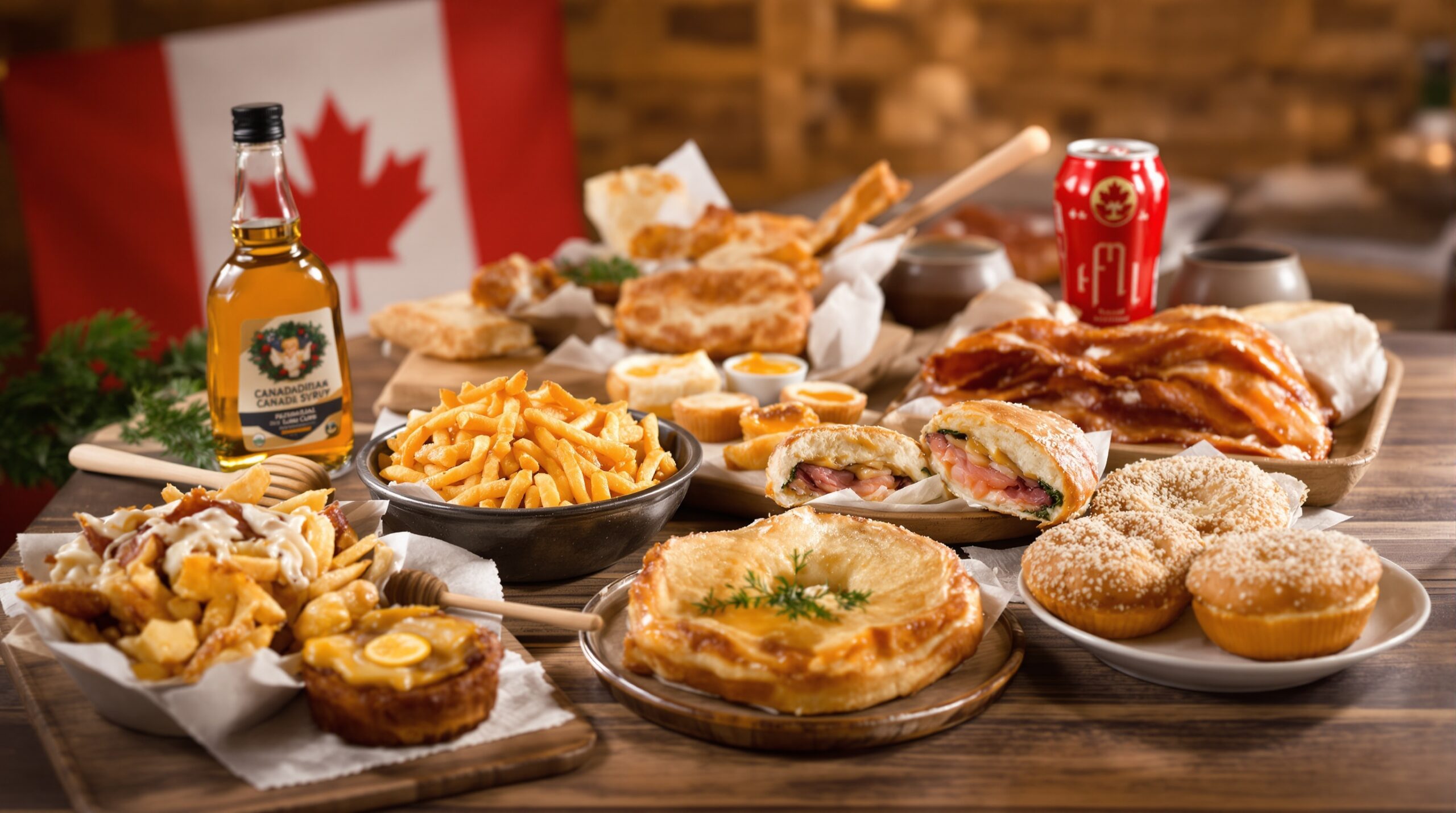
Canada is a country defined as much by its landscapes as by its flavours. From the salty smoke of Atlantic salmon to the sweet stickiness of maple syrup, Canadian foods are a delicious roadmap of history, culture, and migration. Here are 12 iconic Canadian dishes and treats—what they are, where they came from, and the best ways to try them.
1. Poutine
- What it is: Crisp fries topped with cheese curds and hot brown gravy.
- Origin: Quebec, 1950s; a comfort-food born in diners and roadside shacks.
- Why it matters: Poutine is Canada’s culinary emblem of comfort—infinitely adaptable and fiercely debated by purists.
- Try it: Classic in Montreal or experiment with variations (meat, foie gras, vegetarian gravy) across the country.
2. Maple Syrup
- What it is: Sap concentrated into a fragrant, amber syrup.
- Origin: Indigenous peoples of northeastern North America first developed sap-harvesting and boiling techniques.
- Why it matters: More than a sweetener, maple is woven into seasonal traditions—sugaring-off parties in spring.
- Tip: Look for 100% pure maple syrup (not ‘pancake syrup’) and sample grade A dark for robust flavor.
3. Butter Tarts
- What it is: A flaky pastry shell filled with a sweet, gooey mixture of butter, sugar, and eggs—sometimes with raisins or pecans.
- Origin: Ontario and other parts of English Canada; roots in British and American baking traditions.
- Why it matters: Simple but divisive—do you love raisins in your butter tart?
- Try it: Small bakeries and hometown fairs often have the best, slightly runny centers.
4. Nanaimo Bar
- What it is: A no-bake layered square: crumb-sweet base, custard-flavored buttercream center, chocolate topping.
- Origin: Nanaimo, British Columbia (named after the city), mid-20th century.
- Why it matters: A coast-to-coast favourite and an unmistakably Canadian dessert.
- Make it: No oven required—assembly and chilling are the keys.
5. Montreal-Style Bagel
- What it is: Dense, slightly sweet, wood-fired bagels boiled in honey-sweetened water.
- Origin: Brought by Eastern European Jewish immigrants to Montreal.
- Why it matters: Thinner and sweeter than New York bagels; often topped with sesame or poppy seeds.
- Where to get one: St-Viateur or Fairmount Bagel in Montreal—served hot, hand-rolled.
6. Tourtière
- What it is: A spiced meat pie, traditionally made with minced pork, beef, or game.
- Origin: Quebecois; a classic for holiday tables, especially at Christmas.
- Why it matters: Tourtière is comfort food and family ritual—seasoned differently across regions.
- Serving tip: Pair with pickled beets or a simple green salad to cut richness.
7. Peameal (Back) Bacon
- What it is: Lean, wet-cured pork loin rolled in cornmeal—often served as slices in a sandwich.
- Origin: Ontario; sometimes called ‘Canadian bacon’ outside Canada (but not identical to what Americans call Canadian bacon).
- Why it matters: A Toronto staple and breakfast hero.
- Try it: Peameal bacon sandwich on a kaiser bun with mustard in Toronto delis.
8. BeaverTails
- What it is: Fried dough pastries stretched to resemble a beaver’s tail, topped with sugar, cinnamon, chocolate, or fruit.
- Origin: Created in Ontario as a carnaval treat and now a street-food classic.
- Why it matters: Fun, casual, and often tied to winter festivals—an iconic Canadian snack.
9. Bannock
- What it is: A simple fried or baked bread, with Indigenous origins and many variations.
- Origin: Indigenous peoples across Canada; European contact influenced techniques and ingredients.
- Why it matters: Bannock is both everyday sustenance and part of cultural revival—seen at powwows and community gatherings.
- Serving idea: Serve warm with jam, or as a savory flatbread with soups and stews.
10. Atlantic Smoked Salmon
- What it is: Delicate salmon cured and smoked—served as lox or cold-smoked slices.
- Origin: Indigenous smoking techniques later adopted by settlers and commercial producers.
- Why it matters: Salmon is central to coastal foodways and celebrates Canada’s fishing heritage.
- Try it: On bagels, with cream cheese and capers, or simply on rye with lemon.
11. Ketchup Chips & All-Dressed Chips
- What it is: Unique potato-chip flavours beloved across Canada—ketchup-flavored and ‘all-dressed’ (a mix of BBQ, salt & vinegar, and other spices).
- Origin: Manufactured snack innovation with a devoted national following.
- Why it matters: These are comfort-snack foods that spark nostalgia and friendly debate about which flavour wins.
12. Split Pea Soup (with Ham Hock)
- What it is: Hearty slow-simmered soup made from dried peas and smoked ham or ham hock.
- Origin: Common in French-Canadian and Atlantic kitchens—practical, thrifty, and warming.
- Why it matters: A classic winter staple that highlights seasonal preservation and thrift.
Where to start tasting
- Major cities: Montreal for bagels and poutine; Toronto for peameal bacon sandwiches and multicultural takes on classic dishes; Vancouver and the Maritimes for outstanding seafood.
- Seasonal experiences: Visit a sugar shack in spring for maple taffy on snow; winter festivals for BeaverTails and hearty stews.
Quick homemade poutine (for two)
- Ingredients: 4 large potatoes (or frozen fries), 1 cup cheese curds, 1 1/2 cups beef or vegetarian gravy.
- Steps: 1) Bake or fry fries until very crisp. 2) Heat gravy until simmering. 3) Pile fries on a plate, scatter cheese curds, pour hot gravy over to melt curds. Serve immediately.
The bigger flavour story
Canadian cuisine is a blend of Indigenous foods, French and British colonial traditions, and waves of immigration that introduced new ingredients and techniques. The result is a food scene rooted in local ingredients—maple, fish, game, and dairy—yet open to reinvention.
Whether you crave something sweet, savoury, smoky, or fried, Canada’s iconic foods offer a delicious introduction to the country’s history and heart. Plan a tasting road trip, visit local markets, or make one of these at home—the flavours are worth the journey.
Bon appétit (and enjoy with a drizzle of maple syrup when appropriate).